
Palavras-chave
Land-use conversion
Matopiba
Environmental policies
Deforestation
Como Citar




Resumo
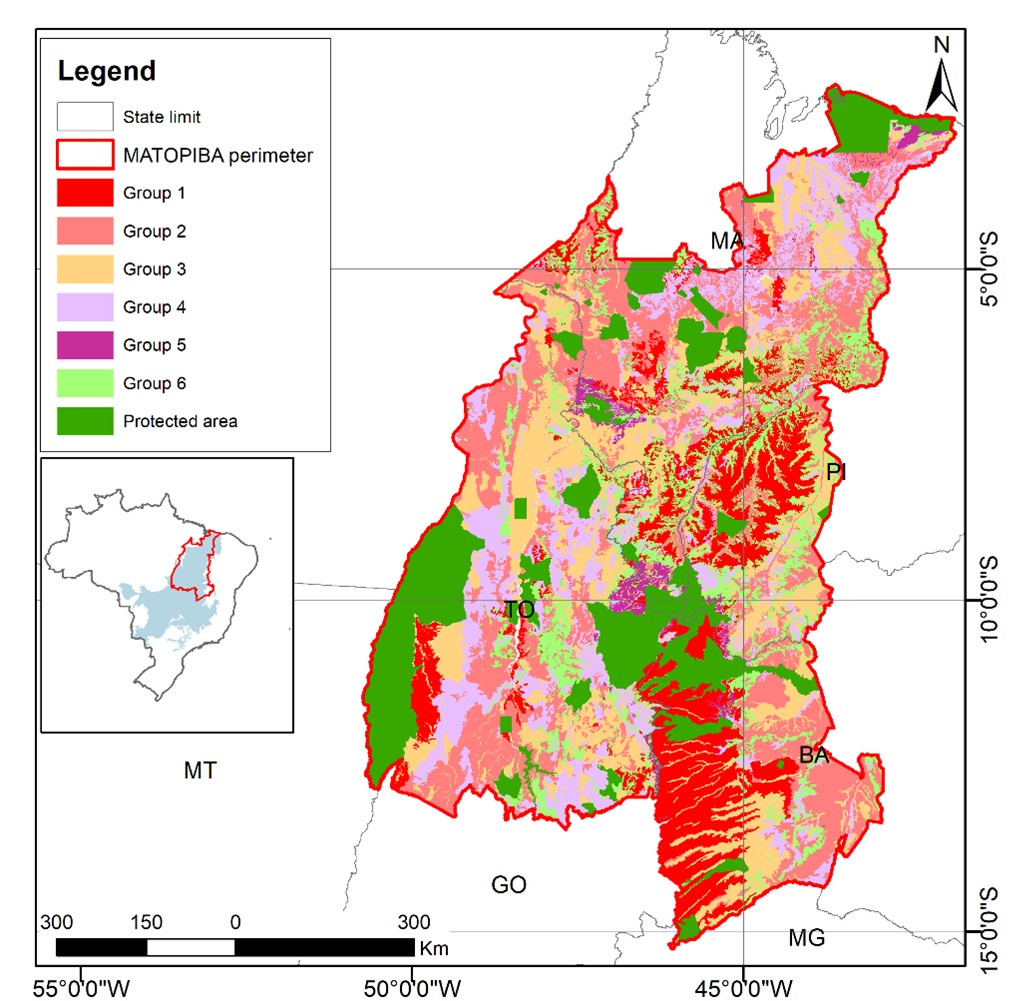
The expansion of agriculture in the Cerrado has led to the highest deforestation rates in Brazil. The conversion of these areas is not only linked to biodiversity loss and the decline of ecosystem services but also does not result in increased agricultural productivity. Considering the Matopiba region— zone of the Cerrado with the highest deforestation rate in the biome—maintaining the current deforestation rate in areas of highest agricultural productivity will lead to the disappearance of native vegetation within the next decade. This land-use conversion is not driven by economic potential, as the most suitable areas for agriculture are predominantly occupied by livestock farming, a less profitable activity, indicating allocative inefficiency. Of the total 18.17 Mha already in use within lands suitable for agriculture, 12.75 Mha are occupied by livestock farmings, with no substantial economic contribution from livestock. Given the need to maintain agricultural productivity in the face of constant market demand, it is essential to establish environmental policies that promote both economic and environmental sustainability. To ensure sustainable growth, environmental policies should leverage land suitabilitys data to boost productivity, direct agricultural financing, and enforce stricter land-use rules—shifting crop expansion from native vegetation to livestock farming conversion in high-suitability areas. Additionally, to prevent the complete elimination of the Cerrado in these areas, it is crucial to establish a higher proportion of legal reserves as a condition for granting new land-clearing licenses. Here, we suggest 60% for areas of highest agricultural suitability, compared to the 20% required by the current Forest Code (Federal Law No. 12,651 of May 25, 2012), aiming to double the lifespan of remaining native vegetation. The measures proposed here outline a pathway for maintaining and increasing the country's agricultural productivity sustainably, mitigating the major impacts of land-use change on biodiversity and ecosystem services.
Referências
ABREU, U. G. P. de; GREGO, C. R.; FASIABEN, M. do C. R.; GOMES, E. G.; ALMEIDA, M. M. de; OLIVEIRA, O. C. de. Beef cattle stocking rate, a key to the conservation of the pastoral system in Brazilian biomes. In: INTERNATIONAL CONFERENCE ON AGRICULTURAL STATISTICS, 6., 2013, Rio de Janeiro. Anais [...]. Rio de Janeiro: IBGE, 2013. Available: http://www.alice.cnptia.embrapa.br/alice/handle/doc/1017878. Accessed on: fev. 20, 2025.
ARRUDA, D. M.; SCHAEFER, C. E.; CORRÊA, G. R.; RODRIGUES, P. M.; DUQUE-BRASIL, R.; FERREIRA-JR, W. G.; OLIVEIRA-FILHO, A. T. Landforms and soil attributes determine the vegetation structure in the Brazilian semiarid. Folia Geobotanica, 50, 175-184, 2015. https://doi.org/10.1007/s12224-015-9221-0.
ARRUDA, D. M.; SCHAEFER, C. E.; FONSECA, R. S.; FERNANDES‐FILHO, E. I.; VELOSO, G. V.; GOMES, L. C.; SOLAR, R. R. Amazonian vegetation types and indigenous lands threatened by upcoming climate change: Forecast impact for Brazilian biomes. Austral Ecology, 49(1), e13369, 2024. https://doi.org/10.1111/aec.13369
BANCO CENTRAL DO BRASIL. Resolução CMD Resolução CMN n° 5.193, de 19/12/2024. Altera normas da Seção 9 (Impedimentos Sociais, Ambientais e Climáticos) do Capítulo 2 (Condições Básicas) do Manual de Crédito Rural – MCR. Banco Central do Brasil.
LIMA, M. G. B.; PERSSON, U. M. Commodity-centric landscape governance as a double-edged sword: the case of soy and the Cerrado Working Group in Brazil. Frontiers in Forests and Global Change. v. 3, 2020 https://doi.org/10.3389/ffgc.2020.00027
BEZERRA, J. E.; GONZAGA, C. L. O discurso regional do Matopiba no poder legislativo federal: práticas e políticas. Revista Nera, n.47, p. 46-63, 2019. https://doi.org/10.47946/rnera.v0i47.6265
BORRAS, S. M.; FRANCO, J. C.; GÓMEZ, S.; KAY, C.; SPOOR, M. Land grabbing in Latin America and the Caribbean. The Journal of Peasant Studies, [S. l.], v. 39, n. 3-4, p. 845-872, 2012. https://doi.org/10.4324/9781315871806
BUENO, M. L.; DEXTER, K. G.; PENNINGTON, R. T.; PONTARA, V.; NEVES, D. M.; RATTER, J. A.; DE OLIVEIRA‐FILHO, A. T. The environmental triangle of the Cerrado Domain: Ecological factors driving shifts in tree species composition between forests and savannas. Journal of Ecology, v. 106, n. 5, p. 2109-2120, 2018. https://doi.org/10.1111/1365-2745.12969
BYERLEE, D.; MASTERS, W. A.; ROBINSON, D. S. Land grabs or land development? In: PINGALI, P., FEDER, G. (ed.). Agriculture and Rural Development in a Globalizing World. 1. ed. New York: Routledge, 2016. p. 75-99. Available: https://www.taylorfrancis.com/chapters/edit/10.4324/9781315314051-4/land-grabs-land-development-derek-byerlee-william-masters-daniel-robinson. Accessed on: fev. 15, 2025.
BRAZIL. Law No. 12,651, of May 25, 2012. Official Gazette of the Union: section 1, Brasília, DF, p. 1, may 28, 2012.
CARREIRA, I.; COSTA, F.; PESSOA, J. P. The deforestation effects of trade and agricultural productivity in Brazil. Journal of development economics, v. 167, 2024. https://doi.org/10.1016/j.jdeveco.2023.103217
CHIARAVALLOTI, R. M.; TOMAS, W. M.; UEZU, A.; SHIRAI, H. Y.; GUARALDO, E.; AOKI, C.; SALVADORI, J. F. Rapid land use conversion in the Cerrado has affected water transparency in a hotspot of ecotourism, Bonito, Brazil. Tropical Conservation Science, v. 15, 2022. https://doi.org/10.1177/19400829221127087
COSTA, A. M.; VIANA, J. H.; EVANGELISTA, L. P.; CARVALHO, D. C.; PEDRAS, K. C.; HORTA, I. M.; SALIS, H. H.; PEREIRA, M. P.; SAMPAIO, J. D. Ponderação de variáveis ambientais para a determinação do Potencial de Uso Conservacionista para o Estado de Minas Gerais. Revista GEOgrafias, Belo Horizonte, v. 14, n.1, p. 118-133, junho, 2017. https://doi.org/10.35699/2237-549X..13439
COSTA, A. M.; SILVA, L. H.; SILVA, V. C.; MOURA, M. S.; MOTA, P. K.; ARAÚJO, B. J. R. S. Potencial de Uso Conservacionista (PUC) e Uso e Cobertura do Solo na Bacia Hidrográfica do Córrego Guavirá, PR. Revista Perspectiva Geográfica-Campus Marechal Cândido Rondon, v. 14, n. 20, p. 107-122, jul./dez, 2019. Available: https://e-revista.unioeste.br/index.php/pgeografica/article/view/24034. Accessed on: jan. 26, 2025.
COUTINHO, L. M. O conceito do Cerrado. Revista Brasileira de Botânica, v. 1, p. 17-23, 1978. https://doi.org/10.1590/S0102-33062006000100002
DUTRA, R. M. S.; SOUZA, M. M. O. D. Cerrado, revolução verde e evolução do consumo de agrotóxicos. Sociedade & Natureza, v. 29, n. 3, p. 469–484, 2017. https://doi.org/10.14393/SN-v29n3-2017-8
EITEN, G. Vegetação do Cerrado. In: PINTO, M. N. (Org.). Cerrado: caracterização, ocupação e perspectivas. 2. ed. Brasília: Editora UnB, 1990. p. 9-65.
EMBRAPA, Sobre o Matopiba. 2025. Available: https://www.embrapa.br/tema-matopiba/sobre-o-tema . Accessed on: mar. 20, 2025.
ESRI ArcMap 10.8 Environmental System Resoration. California: Institute, Redlands, 2019.
ESPÍRITO-SANTO, M. M.; LEITE, M. E.; SILVA, J. O.; BARBOSA, R. S.; ROCHA, A. M.; ANAYA, F. C.; DUPIN, M. G. Understanding patterns of land-cover change in the Brazilian Cerrado from 2000 to 2015. Philosophical Transactions of the Royal Society: Biological Sciences, v. 371(1703), 2016. https://doi.org/10.1098/rstb.2015.0435
FERNANDES, G. W.; RAMOS, L.; FERNANDES, S.; ADAMS, C.; ALENCAR, A. A. C.; ALMADA, E. D.; ANTONINI, Y.; ARAÚJO, F. S.; BARROSO, M.; BERGALLO, H. G.; BERTASSONI, A.; BORGES, J.; BOZELLI, R.; BUSTAMANTE, M.; CALADO, D.; CAMPOS, R. I.; CORNELISSEN, T.; COSTA, W.; COZZUOL, M. A.; DAMASCENO JUNIOR, G. A.; DE MARCO JUNIOR, P.; DIAS, C. P.; DICKINSON, B.; DINIZ FILHO, J. A. F.; FERREIRA, G. B.; FERREIRA, L. G.; FERREIRA, M. E.; FIGUEIRA, J. E. C.; GALLO, E.; GARCIA, L. C.; GOMES, I.; GONÇALVES, L. R.; GONZAGA, A. P. D.; GRELLE, C. E. V.; GUIMARÃES, L.; JACOBI, P. R.; JOLY, C. A.; JUEN, L.; KENEDY-SIQUEIRA, W.; KROLLOW, T. K.; LAUFER, J.; LEAL, C. G.; LOPES, F. A. C.; MACHADO, E. L. M.; MACHADO, F. F.; MARQUES, M.; MELLO, J. H. F.; MENDONÇA FILHO, C. V.; METZGER, J.; MOTA, F. M. M.; NEGREIROS, D.; NEVES, F. S.; NOBRE, C.; OKI, Y.; OLIVEIRA, F. L.; OLIVEIRA, R. P.; OVERBECK, G.; PAULA, G. A.; PEDRONI, F.; PERILLO, L. N.; PILLAR, V.; POLETTE, M.; QUEIROZ, H.; RAJÃO, R.; RIBEIRO, S. P.; ROCHA, C. Q.; RODRIGUES, D. J.; RODRIGUES, R. R.; ROQUE, F. O.; ROSA, C.; SABINO, J.; SANTOS, D. L.; SANTOS, J. C.; SANTOS, M. R.; SEIXAS, C. S.; SILVA, A. C.; SILVA, R. R.; SILVEIRA JUNIOR, E. G.; SOARES, M.; SOLAR, R.; SOUZA JUNIOR, W. C.; TABARELLI, M.; TELLES, M. P. C.; TOMA, T. S. P.; VAZ-DE-MELLO, F. Z. O Brasil em Risco: Os Impactos do PL 2159/2021 na Sustentabilidade e na Governança Ambiental, 2025. https://doi.org/10.6084/m9.figshare.29250836.v1
FEARNSIDE, P. M. Desmatamento na Amazônia Brasileira: História, Índices e Consequências. Megadiversidade, v. 1, n. 1, p. 113-123, 2005.
Flora e Funga do Brasil. Jardim Botânico do Rio de Janeiro. Available: http://floradobrasil.jbrj.gov.br/. Accessed on: apr. 12, 2025.
FRANÇOSO, R. D.; BRANDÃO, R.; NOGUEIRA, C. C.; SALMONA, Y. B.; MACHADO, R. B.; COLLI, G. R. Habitat loss and the effectiveness of protected areas in the Cerrado Biodiversity Hotspot. Nature Conservancy. v. 13, p. 35–40, 2015. https://doi.org/10.1016/j.ncon.2015.04.001
GARRETT, R. D.; KOH, I.; LAMBIN, E. F.; DE WAROUX, Y. L. P.; KASTENS, J. H.; BROWN, J. C. Intensification in agriculture-forest frontiers: Land use responses to development and conservation policies in Brazil. Global Environmental Change, v. 53, p. 233-243, 2018. https://doi.org/10.1016/j.gloenvcha.2018.09.011
GIROLDO, A. B.; SCARIOT, A. Land use and management affects the demography and conservation of an intensively harvested Cerrado fruit tree species. Biological Conservation, 191, 150-158, 2015. https://doi.org/10.1016/j.biocon.2015.06.020
HEILMAYR, R.; RAUSCH, L. L.; MUNGER, J.; GIBBS, H. K. Brazil’s Amazon soy moratorium reduced deforestation. Nature Food, 1(12), 801-810, 2020. https://doi.org/10.1038/s43016-020-00194-5
IBAMA. Desmatamento ilegal no Cerrado gera R$ 206 milhões em multas por descumprimento de embargos e impedimento da regeneração natural. Brasília, DF, 26 jan. 2024. Available: https://www.gov.br/ibama/pt-br/assuntos/noticias/2024/desmatamento-ilegal-no-Cerrado-gera-r-206-milhoes-em-multas-por-descumprimento-de-embargos-e-impedimento-da-regeneracao-natural. Accessed on: mar. 20, 2025.
KLINK, C. A.; MACHADO, R. B. Conservation of the Brazilian cerrado. Conservation biology, v. 19 p. 707-713, 2005. https://doi.org/10.1111/j.1523-1739.2005.00702.x
KRÖGER, M.; NYGREN, A. Shifting frontier dynamics in Latin America. Journal of Agrarian Change, v. 20, p. 364-386, 2020. https://doi.org/10.1111/joac.12354
LEITE-FILHO, A. T.; SOARES-FILHO, B. S., OLIVEIRA, U.; COE, M. Intensification of climate change impacts on agriculture in the Cerrado due to deforestation. Nature Sustainability, v. 8, p. 34-43, 2025. https://doi.org/10.1038/s41893-024-01475-8
LERNER, A. M.; ZULUAGA, A. F.; CHARÁ, J.; ETTER, A.; SEARCHINGER, T. Sustainable cattle ranching in practice: moving from theory to planning in Colombia’s livestock sector. Environmental management, v. 60, p. 176-184. 2017. https://doi.org/10.1007/s00267-017-0902-8
LIMA, D. A. Terra, trabalho e acumulação: o avanço da soja na região Matopiba. Tese Doutorado em Geografia, Universidade Estadual de Campinas, 2019. https://doi.org/10.47749/T/UNICAMP.2019.1092294
LOYOLA, R.; REZENDE, C.; RIBEIRO, B. Áreas prioritárias para conservação e restauração no MATOPIBA. Caderno de Notas Técnicas do Programa Parceria para o Bom Desenvolvimento (GGP/PNUD). Rio de Janeiro: Conservação Internacional Brasil, 2021. https://doi.org/10.48075/igepec.v27i1.30378
LUMBRERAS, J. F.; CARVALHO FILHO, A.; MOTTA, P. E. F.; BARROS, A. H. C.; AGLIO, M. L. D.; DART, R.O.; SILVEIRA, H. L. F.; QUARTAROLI, C. F.; ALMEIDA, R. E. M.; FREITAS, P. L. Aptidão agrícola das terras do Matopiba. Rio de Janeiro: Embrapa Solos, 48 p. il. color. (Embrapa Solos. Documentos, 179), 2015. Available: http://www.infoteca.cnptia.embrapa.br/infoteca/handle/doc/1025303. Accessed on: mar. 25, 2025.
LY, A. Financial globalization and tropical deforestation. Ecological Economics, v. 237, 2025. https://doi.org/10.1016/j.ecolecon.2025.108688
MACHADO, R. B. M. B.; RAMOS NETO, P. G. P.; PEREIRA, E. F.; CALDAS, D. A. GONÇALVES, N. S; SANTOS, K. TABOR E M. STEININGER. Estimativas de perda da área do Cerrado brasileiro. Relatório técnico não publicado. Conservação Internacional, Brasília, DF, 2004.
MAPBIOMAS Mapeamento Anual de Cobertura e Uso da Terra no Brasil - Coleção 9. 2024. Available: https://brasil.mapbiomas.org/wp-content/uploads/sites/4/2024/09/Factsheet-Cerrado_C9_17.09.24_FG-e-AG_v3.pdf . Accessed on: apr. 28, 2025.
MARQUES, M. I. M.; LIMA, D. A. The expansion of agribusiness and territorial conflicts in the Cerrado of Central-North Brazil: The pillaging of land, water and native vegetation. In: ANTHIAS, P., FLORES, P. C. L. (ed.). Neoextractivism and Territorial Disputes in Latin America. 1. ed. New York: Routledge, 2023. p. 81-105. https://doi.org/10.4324/9781003267461
MIRANDA, E. E.; MAGALHÃES, L. A.; DE CARVALHO, C. A. Proposta de Delimitação Territorial do MATOPIBA. Nota Técnica 1, 2014. Available: http://www.infoteca.cnptia.embrapa.br/infoteca/handle/doc/1037313. Accessed on: apr. 28, 2025.
MYERS, N.; MITTERMEIER, R. A.; MITTERMEIER, C. G.; DA FONSECA, G. A.; KENT, J. Biodiversity hotspots for conservation priorities. Nature, 403(6772), 853-858, 2000. https://doi.org/10.1038/35002501
NEPSTAD, D.; MCGRATH, D.; STICKLER, C.; ALENCAR, A.; AZEVEDO, A.; SWETTE, B.; BEZERRA, T.; DIGIANO, M.; SHIMADA, J.; SEROA DA MOTTA, R.; ARMIJO, E.; CASTELLO, L.; BRANDO, P.; HANSEN, M. C.; MCGRATH-HORN, M.; CARVALHO, O.; HESS, L. Slowing Amazon deforestation through public policy and interventions in beef and soy supply chains. Science, v. 344, n. 6188, p. 1118-1123, 2014. Available: https://www.science.org/doi/10.1126/science.1248525. Accessed on: apr. 28, 2025
NÓBREGA, R. L. B.; ZIEMBOWICZ, T.; TORRES, G. N.; GUZHA, A. C.; AMORIM, R. S. S.; CARDOSO, D.; JOHNSON, M. S.; SANTOS, T. G.; COUTO, E.; GEROLD, G. Ecosystem services of a functionally diverse riparian zone in the Amazon–Cerrado agricultural frontier. Global Ecology and Conservation, v. 21, 2020. https://doi.org/10.1016/j.gecco.2019.e00819
OLIVEIRA, V. A.; SANTOS, G. G., KER, J. C.; COUTO, E. G.; JACOMINE, P. K.; CORRÊA, G. R.; CURI, N.; SCHAEFER, C. E. Soils of Cerrados, the Brazilian Savannas. In: The Soils of Brazil. Springer International Publishing, 2023. https://doi.org/10.1007/978-3-031-19949-3
PESSÔA, V. L. S., & INOCÊNCIO, M. E. O prodecer (re)visitado: as engrenagens da territorialização do capital no Cerrado. Revista Campo-Território, v. 9, 2014. https://doi.org/10.14393/RCT91826927
MAPBIOMAS. Annual Report of Deforestation in Brazil 2023. São Paulo: MapBiomas, 2024. Available: http://alerta.mapbiomas.org. Accessed on: apr. 28, 2025.
RADA, N. Assessing Brazil’s Cerrado agricultural miracle. Food Policy, v. 38, p. 146-155, 2013. https://doi.org/10.1016/j.foodpol.2012.11.002
RAJÃO, R.; SOARES-FILHO, B.; NUNES, F.; BÖRNER, J.; MACHADO, L.; ASSIS, D.; OLIVEIRA, A.; PINTO, L.; RIBEIRO, V.; RAUSCH, L.; GIBBS, H.; FIGUEIRA, D. The rotten apples of agribusines. Science, 369(6501), 246-248, 2020. https://doi.org/10.1126/science.aba6646
RAMALHO-FILHO, A.; BEEK, K. J. Sistema de avaliação da aptidão agrícola das terras. 3. ed. rev. Rio de Janeiro: Embrapa-CNPS, 1995. Available: http://www.infoteca.cnptia.embrapa.br/infoteca/handle/doc/330132. Accessed on: apr. 28 2025.RATTER, J. A.; BRIDGEWATER, S.; RIBEIRO, J. F. Analysis of the floristic composition of the Brazilian Cerrado vegetation III: comparison of the woody vegetation of 376 areas. Edinburgh journal of botany, v. 60, p. 57-109, 2003. https://doi.org/10.1017/S0960428603000064
RODRIGUES, W.; VASCONCELOS, S. J.; BARBIERO, A. K. Análise da efetividade socioeconômica do PRODECER III no município de Pedro Afonso, Tocantins. Pesquisa Agropecuária Tropical, v. 39, n.4, p. 301-306. 2009. Available: https://revistas.ufg.br/pat/article/view/5581. Accessed on: apr. 12, 2025
SANO, E. E.; RODRIGUES, A. A.; MARTINS, E. S.; BETTIOL, G. M.; BUSTAMANTE, M. M.; BEZERRA, A. S.; COUTO JÚNIOR, A. F.; VASCONCELOS, V.; SCHÜLER, J.; BOLFE, E. L. Cerrado ecoregions: A spatial framework to assess and prioritize Brazilian savanna environmental diversity for conservation. Journal of environmental management. v. 232, 818-828, 2019. https://doi.org/10.1016/j.jenvman.2018.11.108
SCHMIDT, I. B.; FIGUEIREDO, I. B.; SCARIOT, A. Ethnobotany and effects of harvesting on the population ecology Syngonanthus nitens (bong.) ruhland (eriocaulaceae), a NTFP from Jalapão region, central Brazil. Economic Botany, v. 61, n. 1, p. 73-85, 2007. https://doi.org/10.1663/0013-0001(2007)61[73:EAEOHO]2.0.CO;2
SOARES-FILHO, B.; MOUTINHO, P.; NEPSTAD, D.; ANDERSON, A.; RODRIGUES, H.; GARCIA, R. Role of Brazilian Amazon protected areas in climate change mitigation. Proceedings of the National Academy of Sciences of the United States of America, 107, 10821–10826, 2010. https://doi.org/10.1073/pnas.0913048107
SOUZA, G. V. A. D.; PEREIRA, M. F. V. MATOPIBA: a Inteligência Territorial Estratégica (ITE) e a regionalização como ferramenta. Revista Nera, n. 47, p. 22-45, 2019. https://doi.org/10.47946/rnera.v0i47.6264
SPAROVEK, G.; BERNDES, G.; BARRETTO, A. G. O. P.; KLUG, I. L. F. A revisão do Código Florestal Brasileiro. Novos Estudos - CEBRAP, n. 102, p. 111-135, jul. 2015. https://doi.org/10.1590/S0101-33002011000100007
STRASSBURG, B. B.; LATAWIEC, A. E.; BARIONI, L. G.; NOBRE, C. A.; DA SILVA, V. P.; VALENTIM, J. F.; VIANNA, M.; ASSAD, E. D. When enough should be enough: Improving the use of current agricultural lands could meet production demands and spare natural habitats in Brazil. Global Environmental Change, v. 28, p. 84-97, 2014. https://doi.org/10.1016/j.gloenvcha.2014.06.001
TERRABRASILIS. Supressão da vegetação nativa para o Bioma Amazônia (Raster). 2025. Available: https://terrabrasilis.dpi.inpe.br/geonetwork/srv/eng/catalog.search#/metadata/c91f1d68-b5a5-455e-9d98-dd0573eb6ee0. Accessed on: apr. 28, 2025.
TORRES, M.; DOBLAS, J.; ALARCON, D. F. “Dono é quem desmata”: conexões entre grilagem e desmatamento no sudoeste paraense. São Paulo: Urutu-branco; Altamira: Instituto Agronômico da Amazônia, 2017. Available: https://site-antigo.socioambiental.org/sites/blog.socioambiental.org/files/nsa/arquivos/dono_e_quem_desmata_conexoes_entre_gril1.pdf. Accessed on: sep. 15, 2025.

Este trabalho está licenciado sob uma licença Creative Commons Attribution 4.0 International License.
Copyright (c) 2024 Daniel Meira Arruda, Débora Assumpção e Lima, Fabio Soares de Oliveira, Carlos Ernesto Gonçalves Reynaud Schaefer