
Keywords
Sustainable Tourism
Solid Wastes
How to Cite




Abstract
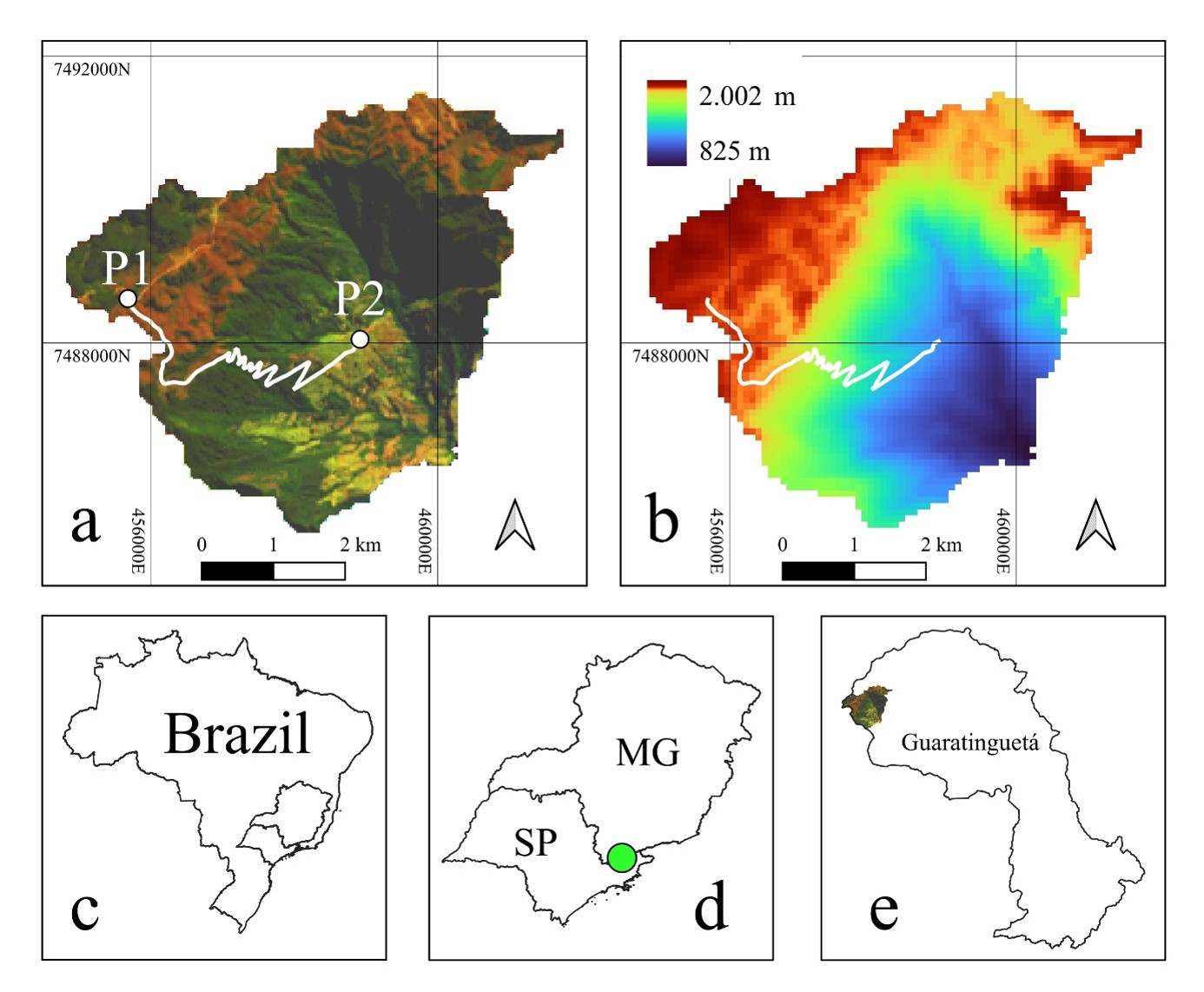
This article presents a comprehensive field study on plastic pollution along a tourist route in the Serra da Mantiqueira Range, an area characterized by intensive tourism and ecotourism activities. Through systematic field surveys, solid waste discarded along the Gomeral Touristic Circuit was identified and georeferenced, enabling both material-based classification and the mapping of critical zones of improper disposal. Plastic waste predominated in the analyzed road section, accounting for 44% of the total identified material, mainly in the form of food packaging and food transport-related items. Approximately 40% of the waste could not be classified due to its advanced state of degradation; however, field observations suggest that a substantial portion consisted of paper products, such as toilet paper, tissues, and napkins. Metals accounted for 8% of the identified waste and consisted almost exclusively of aluminum cans, particularly beer cans, indicating considerable recycling potential. Glass represented only 1% of the total waste and was primarily associated with bottles for beer and other alcoholic beverages. All multilayer carton packaging was exclusively related to beverage consumption, especially dairy products. A total of 668 plastic waste items were identified across the surveyed sections, corresponding to an abundance of 95.5 items per km. Bottles (32%) and packaging (29%) were the predominant categories. Packaging fragments, bags, and sacks accounted for 12% of the plastic waste, while bags and sacks alone represented 10%. Most discarded plastic bottles were associated with hydration products, mainly drinking/mineral water, isotonic beverages, and soft drinks, and were predominantly composed of poly (ethylene terephthalate) (PET). Packaging waste was mainly associated with peanut candy, cookies/biscuits, cereal bars, carbohydrate gels, savory snacks, banana candy, chocolate-coated wafers, and candies. Most of these packages were composed of polypropylene (PP), whereas a smaller proportion was made from other resins. Preliminary mitigation strategies proposed include the installation of waste bins at identified irregular disposal hotspots and the implementation of targeted environmental education initiatives.
References
A12. Shrine of Our Lady of Aparecida. Aparecida: A12, [s.d.]. Available: https://www.a12.com/shrine-of-our-lady-of-aparecida. Accessed on: jun. 8, 2026.
ASSOCIAÇÃO BRASILEIRA DE NORMAS TÉCNICAS. ABNT NBR 13230. Embalagens e acondicionamentos plásticos recicláveis - Identificação e simbologia São Paulo: ABNT, 2008.
ASTM INTERNATIONAL. D7611/D7611M − 20. Standard Practice for Coding Plastic Manufactured Articles for Resin Identification (ASTM, Ed.) West ConshohockenASTM International, 1 jan. 2020. Available: http://www.astm.org/cgi-bin/resolver.cgi?D7611D7611M-20. Accessed on: mar. 3, 2026.
BORRELLE, S. B.; RINGMA, J.; LAW, K. L.; MONNAHAN, C. C.; LEBRETON, L.; MCGIVERN, A.; MURPHY, E.; JAMBECK, J.; LEONARD, G. H.; HILLEARY, M. A.; ERIKSEN, M.; POSSINGHAM, H. P.; DE FROND, H.; GERBER, L. R.; POLIDORO, B.; TAHIR, A.; BERNARD, M.; MALLOS, N.; BARNES, M.; ROCHMAN, C. M. Predicted growth in plastic waste exceeds efforts to mitigate plastic pollution. Science, v. 369, n. 6510, p. 1515–1518, 18 set. 2020. https://doi.org/10.1126/science.aba3656
BRABO, L.; MARTINS, L. L.; ANDRADES, R.; TEIXEIRA, C. E. P.; DO NASCIMENTO, A. P.; DE AZEVEDO, R. N. A.; BEZERRA, L. E. A.; CAVALCANTE, R. M.; COTTENS, K. F.; SOARES, R. A.; DE OLIVEIRA SOUSA, P. H. G.; MONT’ALVERNE, T. F.; SOARES, M. O.; GIARRIZZO, T. A transcontinental threat: Plastic waste from Africa invades Brazil’s coast. Science of the Total Environment, v. 954, 1 dez. 2024. https://doi.org/10.1016/j.scitotenv.2024.176599
ERIKSEN, M.; LEBRETON, L. C. M.; CARSON, H. S.; THIEL, M.; MOORE, C. J.; BORERRO, J. C.; GALGANI, F.; RYAN, P. G.; REISSER, J. Plastic Pollution in the World’s Oceans: More than 5 Trillion Plastic Pieces Weighing over 250,000 Tons Afloat at Sea. PLoS ONE, v. 9, n. 12, 10 dez. 2014. https://doi.org/10.1371/journal.pone.0111913
FOOD AND AGRICULTURE ORGANIZATION OF THE UNITED NATIONS; WORLD TOURISM ORGANIZATION. Mountain tourism – Towards a more sustainable path. Roma: UNEP, 2021.
INSTITUTO NACIONAL DE PESQUISAS ESPACIAIS (INPE). Catálogo de Imagens. 2025 Available: https://www.dgi.inpe.br/catalogo/explore. Accessed on: apr. 24, 2025.
HONORATO-ZIMMER, D.; KIESSLING, T.; GATTA-ROSEMARY, M.; KROEGER CAMPODÓNICO, C.; NÚÑEZ-FARÍAS, P.; RECH, S.; THIEL, M. Mountain streams flushing litter to the sea – Andean rivers as conduits for plastic pollution. Environmental Pollution, v. 291, 15 dez. 2021. https://doi.org/10.1016/j.envpol.2021.118166
HU, H.; ZHANG, J.; WANG, C.; YU, P.; CHU, G. What influences tourists’ intention to participate in the Zero Litter Initiative in mountainous tourism areas: A case study of Huangshan National Park, China. Science of The Total Environment, v. 657, p. 1127–1137, 20 mar. 2019. https://doi.org/10.1016/j.scitotenv.2018.12.114
LASOTA, J.; BŁOŃSKA, E.; PIASZCZYK, W.; TABOR, S. Microplastic on Mountain Trails—a Case Study from the Carpathian and Sudetes Mountains in Poland. Water, Air, and Soil Pollution, v. 234, n. 9, 1 set. 2023. https://doi.org/10.1007/s11270-023-06624-x
LE SAOUT, S.; HOFFMANN, M.; SHI, Y.; HUGHES, A.; BERNARD, C.; BROOKS, T. M.; BERTZKY, B.; BUTCHART, S. H. M.; STUART, S. N.; BADMAN, T.; RODRIGUES, A. S. L. Protected Areas and Effective Biodiversity Conservation. Science, v. 342, n. 6160, p. 803–805, 15 nov. 2013. https://doi.org/10.1126/science.1239268
LIRO, M.; ZIELONKA, A.; VAN EMMERIK, T. H. M.; GRODZIŃSKA-JURCZAK, M.; LIRO, J.; KISS, T.; MIHAI, F. C. Mountains of plastic: Mismanaged plastic waste along the Carpathian watercourses. Science of the Total Environment, v. 888, 25 ago. 2023. https://doi.org/10.1016/j.scitotenv.2023.164058
MACLEOD, M.; ARP, H. P. H.; TEKMAN, M. B.; JAHNKE, A. The global threat from plastic pollution. Science, v. 373, n. 6550, p. 61–65, 2 jul. 2021. https://doi.org/10.1126/science.abg5433
MIHAI, F. C. Rural plastic emissions into the largest mountain lake of the Eastern Carpathians. Royal Society Open Science, v. 5, n. 5, 23 maio 2018. https://doi.org/10.1098/rsos.172396
MIRANDA, E. E. de; (coord.). Brasil em Relevo. Campinas: Embrapa Monitoramento por Satélite, 2005. Available: http://www.relevobr.cnpm.embrapa.br. Accessed on: apr. 24, 2025.
PASTORINO, P.; PIZZUL, E.; BERTOLI, M.; ANSELMI, S.; KUŠĆE, M.; MENCONI, V.; PREARO, M.; RENZI, M. First insights into plastic and microplastic occurrence in biotic and abiotic compartments, and snow from a high-mountain lake (Carnic Alps). Chemosphere, v. 265, 1 fev. 2021. https://doi.org/10.1016/j.chemosphere.2020.129121
PEROLD, V.; RONCONI, R. A.; MOLONEY, C. L.; DILLEY, B. J.; CONNAN, M.; RYAN, P. G. Little change in plastic loads in South Atlantic seabirds since the 1980s. Science of the Total Environment, v. 950, 10 nov. 2024. https://doi.org/10.1016/j.scitotenv.2024.175343
PINHEIRO, H. T.; MACDONALD, C.; SANTOS, R. G.; ALI, R.; BOBAT, A.; CRESSWELL, B. J.; FRANCINI-FILHO, R.; FREITAS, R.; GALBRAITH, G. F.; MUSEMBI, P.; PHELPS, T. A.; QUIMBAYO, J. P.; QUIROS, T. E. A. L.; SHEPHERD, B.; STEFANOUDIS, P. V.; TALMA, S.; TEIXEIRA, J. B.; WOODALL, L. C.; ROCHA, L. A. Plastic pollution on the world’s coral reefs. Nature, v. 619, n. 7969, p. 311–316, 13 jul. 2023. https://doi.org/10.1038/s41586-023-06113-5
POOLEY, J. A.; PSYCH, M. Environmental Education and Attitudes: Emotions and Beliefs are What is Needed. Environment and Behavior, v. 32, n. 5, p. 711-723, 1 sep. 2000. https://doi.org/10.1177/0013916500325007
SCHMELLER, D. S.; URBACH, D.; BATES, K.; CATALAN, J.; COGĂLNICEANU, D.; FISHER, M. C.; FRIESEN, J.; FÜREDER, L.; GAUBE, V.; HAVER, M.; JACOBSEN, D.; LE ROUX, G.; LIN, Y.-P.; LOYAU, A.; MACHATE, O.; MAYER, A.; PALOMO, I.; PLUTZAR, C.; SENTENAC, H.; SOMMARUGA, R.; TIBERTI, R.; RIPPLE, W. J. Scientists’ warning of threats to mountains. Science of The Total Environment, v. 853, p. 158611, 20 dez. 2022. https://doi.org/10.1016/j.scitotenv.2022.158611
SENESE, A.; PECCI, M.; AMBROSINI, R.; DIOLAIUTI, G. A. MOUNTAINPLAST: A New Italian Plastic Footprint with a Focus on Mountain Activities. Sustainability, v. 15, n. 8, p. 7017, 21 abr. 2023. https://doi.org/10.3390/su15087017
STEG, L.; VLEK, C. Encouraging pro-environmental behaviour: An integrative review and research agenda. Journal of Environmental Psychology, v. 29, n. 3, p. 309–317, set. 2009. https://doi.org/10.1016/j.jenvp.2008.10.004
VILANOVA, M. R. N. The Need for Ecohydrological Research in Brazilian Mountains: the Case of the Serra da Mantiqueira Range. Brazilian Archives of Biology and Technology, v. 68, 2025. https://doi.org/10.1590/1678-4324-2025241023
VILLANOVA-SOLANO, C.; HERNÁNDEZ-SÁNCHEZ, C.; DÍAZ-PEÑA, F. J.; GONZÁLEZ-SÁLAMO, J.; GONZÁLEZ-PLEITER, M.; HERNÁNDEZ-BORGES, J. Microplastics in snow of a high mountain national park: El Teide, Tenerife (Canary Islands, Spain). Science of the Total Environment, v. 873, 15 maio 2023. https://doi.org/10.1016/j.scitotenv.2023.162276
WILLIS, K.; HARDESTY, B. D.; VINCE, J.; WILCOX, C. Local waste management successfully reduces coastal plastic pollution. One Earth, v. 5, n. 6, p. 666–676, 17 jun. 2022. https://doi.org/10.1016/j.oneear.2022.05.008
XANTHOS, D.; WALKER, T. R. International policies to reduce plastic marine pollution from single-use plastics (plastic bags and microbeads). A review. Marine Pollution Bulletin, v. 118, n. 1–2, p. 17–26, 15 maio 2017. https://doi.org/10.1016/j.marpolbul.2017.02.048

This work is licensed under a Creative Commons Attribution 4.0 International License.
Copyright (c) 2025 Mateus Ricardo Nogueira Vilanova