Authority, Law and Democracy

Approaches to Hans Kelsen and Carl Schmitt

Authors

  • Caio Ramiro UEL;ITE https://orcid.org/0000-0002-1050-1875
  • Alessandro Severino Valler Zenni UEM; UNIVEL
  • Gabriel Bispo Filogenio FD-Universidade Estadual de Maringá (UEM)
  • Vitor Augusto Faria Pereira Faculdade Maringá

DOI:

https://doi.org/10.14393/RFADIR-53.1.2025.80681.171-204

Keywords:

Liberal democracy, Popular democracy, Right, Exception, Legitimacy

Abstract

The meaning of democracy has been disputed nowadays, a topic that refers to the memorable debate between Kelsen and Schmitt, at the dawn of the 20th century and, supposedly buried by the passage of time and the advent of neo-positive-constitutionalism, returns to reverberate in the contemporary neo-fascist approach, with shining colors of popular democracy, gradually eroding the concrete foundations of liberal democracy, the genesis of the Roussean model. The outlined text seeks to record the main ideas of Kelsen's positivism, the avoidance of methodological syncretism in the science of law, without neglecting its penchant for the parliamentary model of popular representation, and the central role of law in the origin and limits of constituted powers, including minorities in the range of protections and guarantees of freedoms, notably by force of jus, while, on the opposite line, in Schmitt's theory, the main line of his thought is in power of the sovereign, popularly acclaimed, and bastion of democracy, who is responsible for decreeing the exception and eliminating the enemy of the majority, using law as a tool to legitimize political decisions; the incorporated method is dialectical with reinforcement of theoretical-doctrinal explanation.
 

Author Biographies

  • Caio Ramiro, UEL;ITE

    Professor no Instituto Latino-Americano de Economia, Sociedade e Política da Universidade Federal da Integração Latino-Americana (UNILA). Professor colaborador na pós-graduação em Filosofia Política e Jurídica da Universidade Estadual de Londrina (UEL) e na pós-graduação em Filosofia, Psicanálise e Cultura da PUCPR (Curitiba). Doutor em Direito pela Universidade de Brasília (UnB). Líder do Grupo de Estudos Schmittianos. Líder do projeto de pesquisa Carl Schmitt na tríplice fronteira: leituras schmittinas em Argentina, Brasil e Paraguai (UNILA). Pesquisador nos grupos: Crítica Constitucional, vinculado ao programa de pós-graduação em Direito da Faculdade de Direito da Universidade de Brasília (UnB); Grupo de Estudos Miroslav Milovic, vinculado a Faculdade de Direito da Universidade Federal de Campina Grade (UFCG); Ética, política e religião, vinculado ao programa de pós-graduação em Ciências da Religião da PUC-Campinas.

  • Alessandro Severino Valler Zenni, UEM; UNIVEL

    Professor na Faculdade de Direito da Universidade Estadual de Maringá (UEM) e no Programa de Pós-Graduação (Mestrado) em Direito do Centro Universitário de Cascavel (UNIVEL). Doutor em Filosofia do Direito pela Pontifícia Universidade Católica de São Paulo (PUC/SP). Pós-Doutor na Universidade de Lisboa. Advogado. Pesquisador no grupo Ética, política e religião, vinculado ao programa de pós-graduação em Ciências da Religião da PUC-Campinas, no Grupo de Estudos Schmittianos. Líder do grupo de pesquisa A-lex, vinculado ao programa do mestrado em Direito da UNIVEL.

  • Gabriel Bispo Filogenio, FD-Universidade Estadual de Maringá (UEM)

    Graduando em Direito pela Universidade Estadual de Maringá (UEM). Integrante do Grupo de Estudos Schmittianos.

  • Vitor Augusto Faria Pereira, Faculdade Maringá

    Graduando em Direito pela Faculdade Maringá

Published

2026-10-06

How to Cite

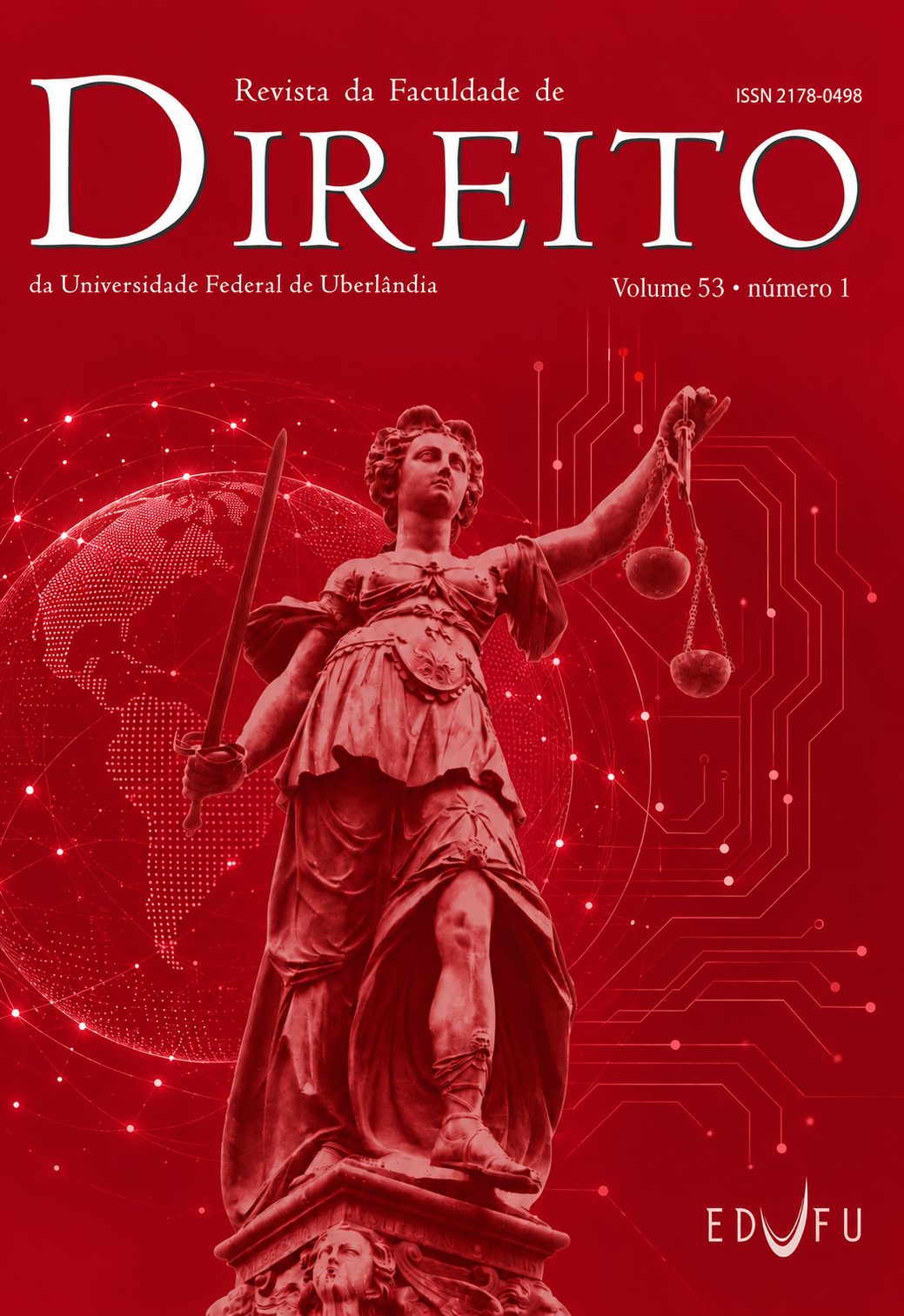
Authority, Law and Democracy: Approaches to Hans Kelsen and Carl Schmitt. (2026). Journal of the Faculty of Law of the Federal University of Uberlândia, 53(1), 171-204. https://doi.org/10.14393/RFADIR-53.1.2025.80681.171-204